
Ideas taking
different forms.
One principal institutional project and three complementary initiatives connect the Foundation’s work with institutions, culture, living systems and human experience.
Principal project supported
Confédération
S-Д.holdings
A proposed experimental environment for natural persons, legal persons and electronic persons: considering identities, rights, responsibilities, contracts and institutions together.
Discover the Confederation

Culture and foresight
Dune University
Learn more — Dune University, machines and institutions
Machines and the ability to appeal
The world of Dune imagines a profound break between humanity and intelligent machines, followed by societies that develop their abilities differently. This fictional detour makes it possible to examine loss of control, the rejection of dependence and the institutions that follow. It does not mean that the work predicted contemporary AI systems.
In The Dune Encyclopedia, the entry on the Butlerian Jihad links machines with the disruption of exchange and the possibility of challenging their judgements. It offers a starting point for discussing a present-day question: how can people retain recourse when a system becomes indispensable?
Power and interdependence
The distribution of resources, lineages, political organisations and Arrakis’s ecology make it possible to follow the consequences of a choice across a society. Institutions shape human relationships as well as the tools available to people. Changes to an environment can also produce effects that its original purpose did not anticipate.
Dune University develops this cultural setting through reading, publication and discussion. Fiction helps build scenarios and test the coherence of a proposal; it does not replace scientific validation. Its contribution to the Foundation is to make the dependencies between technology, governance and human evolution visible.

Living systems and coexistence
ЯдT
Learn more — ЯдT and coexistence between species
Sharing an environment
ЯдT starts from the relationship between humans and rats. A space designed for only one species can limit what others can do: move, hide, explore, form relationships or avoid a situation. Observing these differences shifts the discussion from simple proximity to the concrete conditions of coexistence.
Animal intelligence is understood through bodies, interactions and environments. Learning, adaptation and problem-solving do not imply abilities identical to our own. Yet recognising difference should not lead us to disregard living beings’ needs or assess their place only by their usefulness to humans.
Understanding biological intelligences
This setting informs the Foundation’s work on multiple forms of intelligence. It invites us to design environments that account for different participants and then examine the compromises those rules impose on people.
The connection to biological substrates remains a separate research question. Embodied cognition may inspire comparisons with artificial systems; it does not turn an animal into a computing device. Any prospect of an interface or hybridisation would need separate evidence of its relevance, effects and protections for living systems. ЯдT therefore has its own ecological and relational value beyond any possible technical application.
Perception and human experience
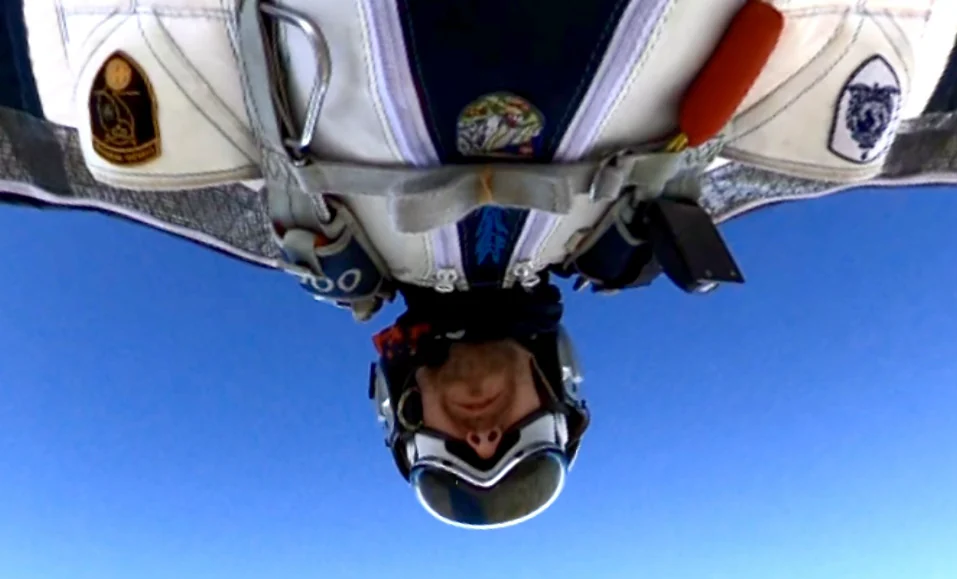
Wingsuit Swiss Academy
Learn more — Wingsuit, perception and technical assistance
The body and decision
Wingsuit flying combines preparation, concentration, reading a changing environment and awareness of one’s limits. Equipment participates in the action, but the practice remains physical: fatigue, sensation and the consequences of a decision cannot be reduced to displayed data. That does not make every jump a scientific experiment.
The initiative is interested in passing on this experience: observation, first-person recording and trajectory analysis can make certain aspects easier to discuss. Risk management also requires recognising missing information and the conditions in which one should decline to proceed.
Interfaces in service of attention
Augmented reality, spatial computing, simulation and AI assistance raise practical questions: what information should be shown, when and with what reliability? An interface that is too prominent can add distraction where it promised help. Its value depends as much on its effects on attention as on its sophistication.
Ideas around Wingsuit Swiss Academy include immersive systems and links with wind-tunnel simulation. These directions need their own evaluation; success in a digital setting does not establish mastery of a real flight. For the Foundation, the challenge is to understand how to extend capabilities while preserving a person’s judgement, perception and responsibility.
Continue exploring
Act with the Foundation
Contribute a skill, propose a partnership or support the work: choose how you would like to take part.